
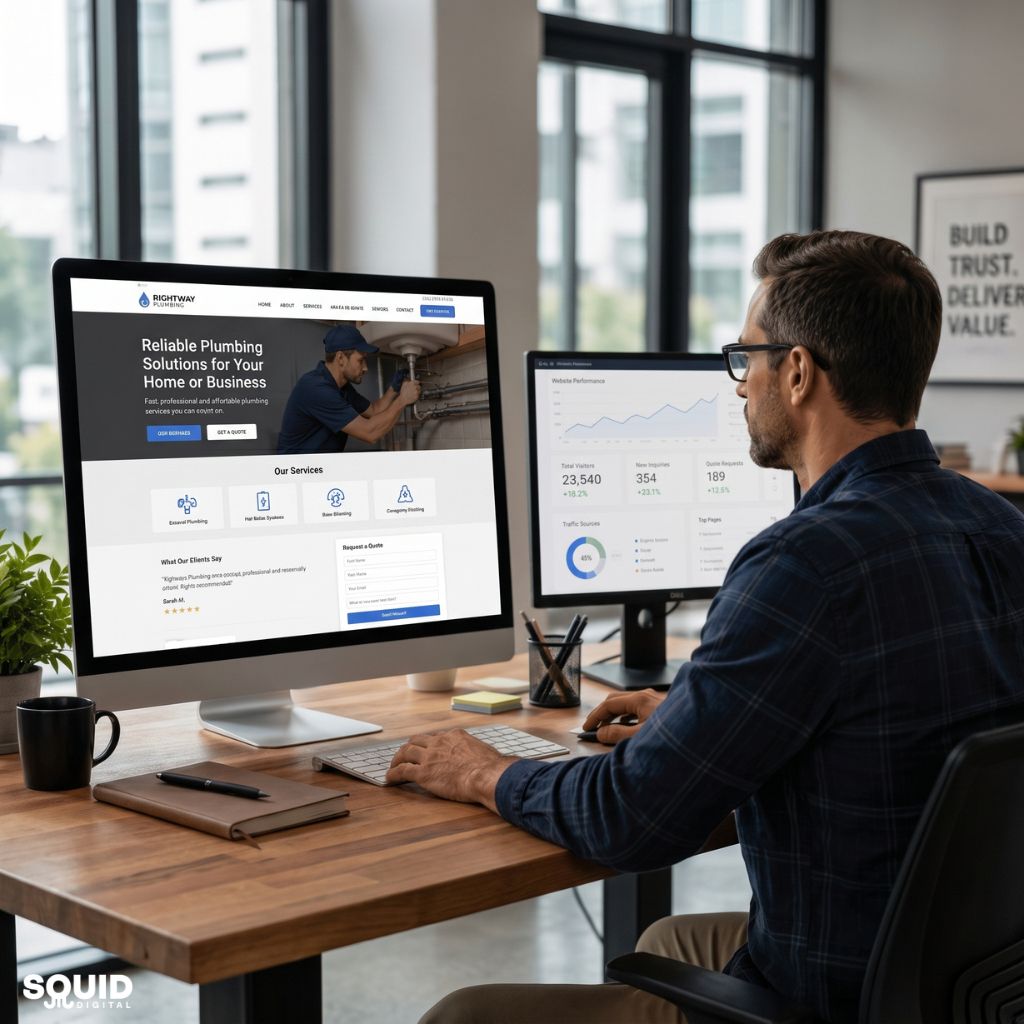
Whether you run a plumbing company, accounting firm, legal practice, healthcare clinic or marketing agency, effective website design for service businesses is often the first factor potential customers evaluate when deciding whether to make contact.
A well-designed website does more than look professional. It helps visitors quickly understand what you offer, why they should choose your business and how they can take the next step. In today’s competitive market, customers expect websites to be fast, mobile-friendly and easy to navigate.
As search engines and AI-powered answer engines continue to prioritise helpful user experiences, effective website design for service businesses has become an essential growth tool rather than a simple online brochure.
This guide explains what makes a service business website successful, why design directly impacts growth, and how small businesses can create websites that convert visitors into customers.
What Is Website Design for Service Businesses?
Understanding Service-Based Website Design
Website design for service businesses refers to the planning, structure, visual design and functionality of a website created specifically to promote and sell services rather than physical products.
Unlike e-commerce websites, service business websites focus on generating enquiries, consultations, bookings or phone calls. Their primary objective is to build trust and encourage visitors to take action.
Effective service business website design combines user experience, content strategy, branding and conversion optimisation to support business goals.
At its core, website design for service businesses focuses on turning website visitors into enquiries, consultations and paying customers through a combination of user experience, trust-building and clear messaging.
Core Objectives of a Service Business Website
The most successful website design for service businesses aligns every page, design element and conversion path with a specific business objective.
Most service-based websites aim to achieve several key objectives:
- Build credibility and trust
- Clearly explain services
- Demonstrate expertise
- Generate leads and enquiries
- Improve customer experience
- Support long-term business growth
Every design decision should contribute to one or more of these objectives.
Common Types of Service Businesses That Benefit
Many industries benefit from professional website design for service businesses, including:
- Trades and home services
- Accounting firms
- Legal practices
- Healthcare providers
- Consultants
- Marketing agencies
- Cleaning companies
- Property services
- Local professional services
Regardless of industry, customers want confidence before making contact.
Why Website Design Has a Direct Impact on Business Growth

Website design for service businesses directly influences how customers perceive credibility, professionalism and expertise. Businesses that invest in user-focused design often generate more enquiries and stronger customer engagement.
Website design directly influences customer trust, engagement and conversion rates. A poorly designed website can drive visitors away, while a well-designed website can increase enquiries and revenue.
How Customers Evaluate a Business Online
Research consistently shows that first impressions happen within seconds.
When visitors arrive on your website, they immediately assess:
- Professional appearance
- Ease of navigation
- Trustworthiness
- Relevance to their needs
- Quality of information
If visitors struggle to find answers, they often leave and contact a competitor instead.
The Business Benefits of Effective Website Design
A strong website can produce measurable business benefits:
- Higher enquiry rates
- Increased phone calls
- Better conversion rates
- Improved customer trust
- Greater search visibility
- Enhanced brand reputation
For many service businesses, even a small increase in conversion rate can lead to significant revenue growth over time.
For many organisations, investing in website design for service businesses delivers a stronger long-term return than simply increasing advertising spend.
Key Statistics and Consumer Behaviour Trends
Customer behaviour continues to evolve.
Several trends influence website performance:
- Mobile traffic often exceeds desktop traffic.
- Users expect pages to load within a few seconds.
- Local searches frequently result in direct enquiries.
- Customers compare multiple providers before making contact.
Industry experience shows that businesses investing in usability and customer experience often outperform competitors relying solely on advertising.
Key Takeaways
- First impressions influence customer decisions.
- User experience affects trust and conversions.
- Website quality can directly impact revenue growth.
The Essential Elements of a High-Performing Service Business Website
The principles of website design for service businesses remain consistent across most industries. Regardless of the service offered, successful websites prioritise clarity, trust and conversion.
Successful website design for service businesses includes several essential components working together.
Clear Value Proposition Above the Fold
Visitors should immediately understand:
- What the business does
- Who it serves
- What makes it different
- How to get started
A clear value proposition reduces confusion and increases engagement.
Service Pages That Answer Customer Questions
Every service page should explain:
- The service offered
- Common customer problems
- Benefits of the solution
- Frequently asked questions
- Expected outcomes
Well-structured service pages improve both user experience and search visibility.
Detailed service pages are one of the most valuable components of website design for service businesses because they help both potential customers and search engines understand your expertise.
Strong Calls-to-Action
Calls-to-action (CTAs) guide visitors towards the next step.
Examples include:
- Request a quote
- Book a consultation
- Contact us today
- Schedule an appointment
The best CTAs are visible, relevant and easy to follow.
Trust-Building Features
Trust signals help reduce uncertainty.
Common examples include:
- Customer testimonials
- Reviews
- Case studies
- Industry certifications
- Professional memberships
- Awards and recognition
These elements reassure potential customers before they enquire.
Mobile-Friendly and Fast Performance
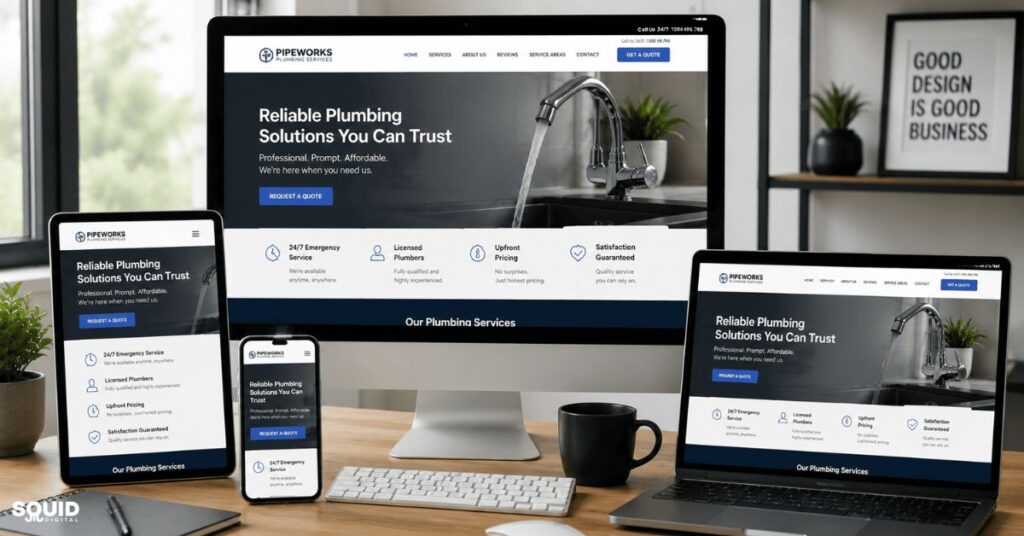
Mobile responsiveness is no longer optional.
A high-performing website should:
- Adapt to different screen sizes
- Load quickly
- Offer intuitive navigation
- Maintain readability across devices
Fast, mobile-friendly websites generally provide a better customer experience and stronger conversion performance.
Modern website design for service businesses must prioritise mobile usability because a growing percentage of enquiries now come from smartphones and tablets.
A Simple Framework for Designing a Website That Converts
A structured approach helps businesses maximise the value of their website design for service businesses investment while improving customer experience and conversion performance.
Creating an effective website design for service businesses becomes easier when following a structured process.
The 5-Step Website Design Process
1. Define Business Goals
Identify what success looks like.
Examples include:
- More enquiries
- More bookings
- More phone calls
- Increased local visibility
Clear goals guide design decisions.
2. Understand Target Customers
Research your ideal customers.
Consider:
- Common problems
- Search behaviour
- Buying motivations
- Frequently asked questions
Understanding customer needs improves website relevance.
3. Plan Website Structure
Organise information logically.
Typical pages include:
- Home
- About
- Services
- Locations
- Testimonials
- Contact
Clear navigation helps users find information quickly.
An organised structure is a foundational element of effective website design for service businesses because it helps visitors find information quickly and easily.

4. Design for User Experience
Focus on simplicity.
Prioritise:
- Readability
- Navigation
- Mobile usability
- Conversion paths
Good design removes friction from the customer journey.
5. Measure and Improve Performance
Monitor website performance regularly.
Track metrics such as:
- Traffic
- Conversion rates
- Bounce rates
- Enquiries
- Phone calls
Continuous improvement often produces the best long-term results.
Checklist: Before Launching Your Website
Before going live, ensure your website includes:
- Clear homepage messaging
- Easy-to-use navigation
- Mobile responsiveness
- Fast loading speeds
- Visible contact information
- Strong CTAs
- Service-specific content
- Analytics tracking
- Basic SEO optimisation
- Security measures
Website Features: Which Ones Help and Which Ones Hurt?
When evaluating website design for service businesses, it is important to distinguish between features that support conversions and those that create unnecessary friction.
Not every website feature improves performance. Some help users, while others create unnecessary friction.
Comparison Table: Effective vs Ineffective Website Design Choices
| Effective Website Design | Ineffective Website Design |
|---|---|
| Clear navigation | Confusing menu structure |
| Fast loading pages | Slow page performance |
| Visible CTA buttons | Hidden contact options |
| Mobile-friendly layouts | Desktop-only designs |
| Genuine testimonials | No social proof |
| Simple enquiry forms | Overly complex forms |
| Helpful service content | Thin or generic content |
Features Worth Prioritising
Service businesses often benefit from:
- Online booking systems
- Service area pages
- FAQ sections
- Testimonials
- Live chat functionality
- Click-to-call buttons
These features improve customer convenience.
Features That Often Create Friction
Some features can negatively affect usability:
- Auto-playing videos
- Excessive animations
- Too many pop-ups
- Cluttered layouts
- Complicated navigation
Good design prioritises clarity over unnecessary complexity.
Real-World Example: How Better Website Design Can Improve Enquiries

Scenario: Local Plumbing Business Website Redesign
Before the Redesign
A local plumbing company had a website that looked outdated and performed poorly on mobile devices.
Customers struggled to find contact details and service information.
Changes Implemented
The business redesigned its website with:
- Simplified navigation
- Faster page speeds
- Mobile-responsive layouts
- Improved service pages
- Customer testimonials
- Prominent contact buttons
Potential Outcomes
Following the redesign, the company experienced:
- Increased enquiry submissions
- More phone calls
- Improved engagement metrics
- Stronger customer confidence
Lessons Small Businesses Can Apply
This example highlights several important lessons:
- Simplicity often performs better than complexity.
- Trust signals influence customer decisions.
- Mobile usability matters.
- Clear CTAs increase conversions.
Summary
Situation:
- Outdated website
- Poor user experience
Action:
- Improved structure, speed and trust signals
Outcome:
- Higher engagement and more enquiries
Common Website Design Mistakes Service Businesses Should Avoid
Many businesses unintentionally create barriers that reduce conversions.
Prioritising Appearance Over Functionality
A visually impressive website is ineffective if visitors cannot find what they need.
Design should support usability, not distract from it.
Ignoring Mobile Users
Mobile users often represent the majority of website visitors.
Poor mobile experiences can significantly reduce enquiries and conversions.
Weak or Missing Calls-to-Action
Visitors need direction.
Without clear CTAs, potential customers may leave without taking action.
Overloading Pages With Information
Too much content can overwhelm visitors.
Prioritise clarity and organise information into manageable sections.
Neglecting Ongoing Website Maintenance
A website requires regular updates.
Failure to maintain a website can lead to:
- Security vulnerabilities
- Slow performance
- Broken links
- Outdated content
Website design should be viewed as an ongoing business asset rather than a one-time project.
Frequently Asked Questions
How much does website design for service businesses typically cost?
Costs vary depending on complexity, functionality and customisation. Small business websites can range from a few thousand dollars to significantly more for custom solutions.
What pages should every service business website include?
At minimum, include a homepage, service pages, about page, testimonials, contact page and privacy policy.
How often should a business redesign its website?
Most businesses should review their website every few years. Smaller updates and ongoing improvements should occur regularly.
Why is mobile-friendly website design important?
Most users browse on mobile devices. A mobile-friendly website improves usability, customer satisfaction and conversion rates.
Can website design improve local SEO performance?
Yes. Website structure, user experience, page speed and content quality can all contribute to improved local search visibility.
What is the most important element of a service business website?
Clarity is often the most important factor. Visitors should immediately understand what the business offers and how to make contact.
Should small businesses invest in custom website design?
Custom design can provide advantages when tailored to business goals, customer needs and conversion objectives. However, the solution should match the business’s budget and requirements.
How can I measure whether my website is generating leads?
Track enquiries, phone calls, contact form submissions, bookings and conversion rates using analytics and reporting tools.
Building a Website That Supports Long-Term Business Success
Website design for service businesses is about more than appearance. It is about creating an online experience that builds trust, answers customer questions and encourages action.
The most successful websites combine strong user experience, clear messaging, mobile responsiveness and effective conversion strategies. Businesses that focus on these fundamentals often see improvements in enquiries, customer engagement and long-term growth.
Rather than chasing design trends, prioritise customer needs, usability and business objectives. A website that makes life easier for visitors is far more likely to deliver meaningful results.
Assessing Whether Your Website Is Ready for Growth
Take a fresh look at your current website from a customer’s perspective. Small improvements to clarity, usability and trust signals can often make a significant difference to enquiry rates and overall business performance.
Whether you’re launching a new website or planning a redesign, we’re here to help. Contact us to discuss your next website project.
Stay up to date with the latest website, SEO and digital marketing trends by subscribing to our LinkedIn newsletter.